Date: 11-20-2024
Source: An Episode of This Jungian Life
Tags: shadow unconscious mythology archetypes
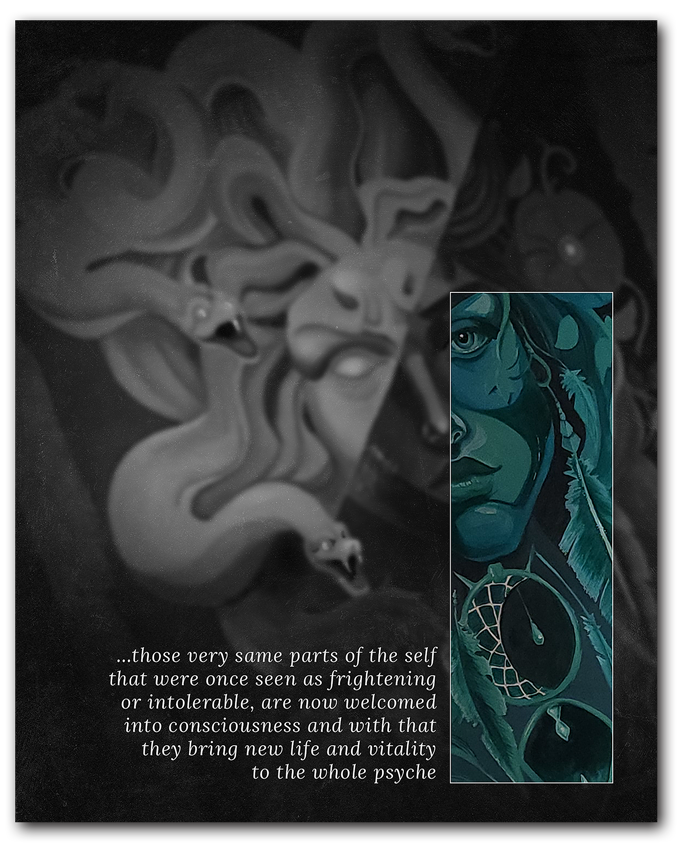
Medusa, 2024. Acrylic. Yours Truly.
The Medusa episode of This Jungian Life podcast explores the evolution of Medusa’s myth and its psychological and cultural significance. Here are the key insights:
-
Mythological Background: Medusa’s earliest depiction in Hesiod’s Theogony portrays her as a mortal with a deadly gaze. Ovid later redefined her monstrous image as Athena’s punishment for desecration in her temple, a story that highlights themes of injustice and transformation
-
Symbolic Interpretations:
- Freud’s Perspective: Medusa symbolizes castration anxiety—a fear of powerlessness.
- Jungian View: Medusa represents aspects of the anima (feminine psyche), with Perseus’ conquest of her symbolizing the integration of the darker, instinctual feminine into consciousness
-
Feminist Reinterpretations: Scholars like Hélène Cixous argue that Medusa’s “monstrosity” reflects societal suppression of female power and sexuality. Modern interpretations reclaim her as a symbol of resilience and empowerment, challenging the patriarchal narrative
-
Archetypal and Natural Forces: Medusa embodies chaos and primal power, reflecting humanity’s tension with untamed natural forces. Her gaze, which petrifies, serves as a reminder of nature’s raw and overwhelming strength
-
Contemporary Significance: Medusa’s ongoing reinterpretation underscores the adaptability of myths, showing how archetypal symbols evolve to meet the needs of different eras. She moves from a figure of fear to an icon of transformation and empowerment
Key Points from this episode:
-
Medusa symbolizes “the dark feminine that we fear yet cannot look away from—she is chaos, power, and transformation.”
-
Freud saw her as “a symbol of castration anxiety,” while Jung perceived her as “the shadowed anima demanding integration.”
-
“By slaying Medusa, Perseus isn’t conquering her but integrating her chaos into himself—becoming whole.”
-
Medusa’s story reflects “the patriarchal repression of the feminine principle,” especially through Athena’s role in her curse.
-
“Her gaze petrifies because it forces us to confront the terror of the unconscious.”
-
Feminist thinker Hélène Cixous reclaims her as “a symbol of feminine power, distorted and demonized by a fearful world.”
-
“Medusa’s monstrous form is the ancient fear of nature’s untamed force personified.”
-
“When Perseus wields her severed head, it is not just power he claims but the ability to transform fear into strength.”
-
“From a figure of fear to one of resilience, Medusa’s myth is a canvas of human transformation.”
-
“Her enduring myth reminds us that what terrifies us often holds the key to our greatest power.”